
Rain Moves Onto the Northwest Washington Coast and Vancouver Island Right on Schedule as the Pacific Northwest Wet Season Settles In
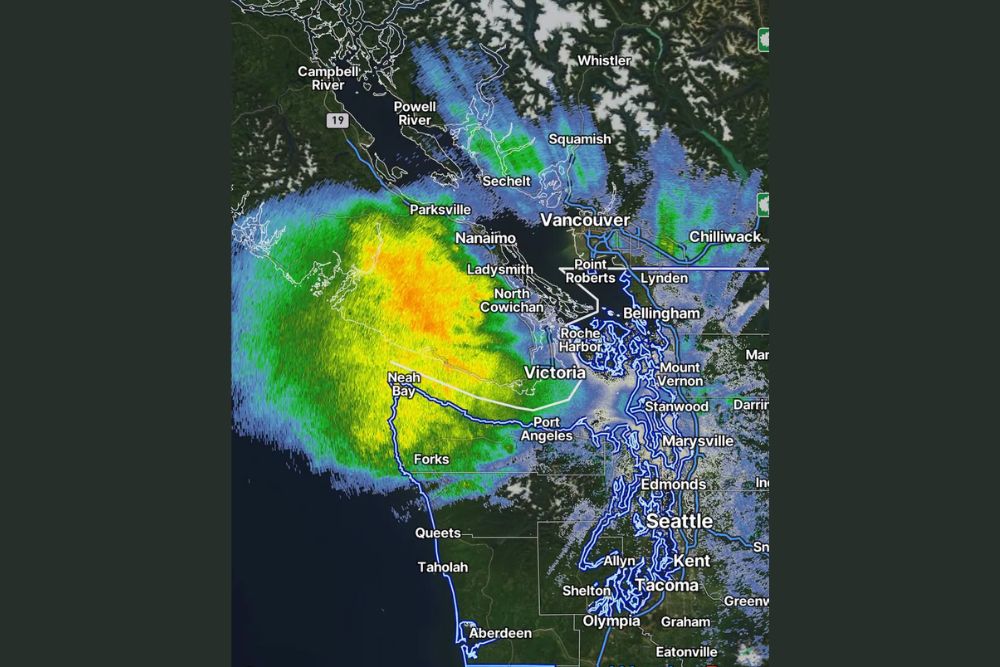
Northwest Washington – The rain arrived right on schedule along the northwest Washington coast and Vancouver Island on Saturday, September 26. Radar showed a broad area of rain pushing in from the Pacific Ocean, soaking the Olympic Peninsula and much of Vancouver Island while spreading toward the Strait of Juan de Fuca and parts of southwestern British Columbia. For many in the Pacific Northwest, it was a clear sign that the region’s familiar fall rainy pattern is beginning to take hold.
Heaviest Rain Over Vancouver Island
The heaviest rain on radar was focused over central and southern Vancouver Island. The most intense area of precipitation sat west of Nanaimo, Ladysmith, and North Cowichan, where radar showed pockets of moderate to heavy rain moving across the interior of the island.
Lighter rain extended north toward Parksville and along the island’s western coastline, while the southern tip of the island near Victoria saw lighter showers as the leading edge of the rain approached.
Olympic Peninsula Gets Soaked
On the U.S. side, the Olympic Peninsula took the brunt of the rain. Communities including Neah Bay, Forks, and Port Angeles were covered by a wide band of steady rain as the system rolled in off the ocean. Rain also spread along the Strait of Juan de Fuca, bringing wet conditions to the northern edge of the peninsula.
Farther south along the coast, areas near Queets and Taholah were near the southern edge of the rain shield, with lighter amounts showing up on radar.
Rain Bands Reach Into British Columbia
Beyond Vancouver Island, several bands of rain stretched across the Strait of Georgia and into the mainland of British Columbia. Areas near Sechelt, Squamish, and Whistler saw lighter rain moving through, while additional showers reached east toward Chilliwack in the Fraser Valley.
The Vancouver metro area was mostly on the edge of the activity at the time, with lighter showers nearby as the main rain area pushed inland.
Puget Sound Stays Mostly Dry for Now
While the coast and islands were soaked, much of the Puget Sound region remained largely dry at the time. Seattle, Tacoma, Olympia, Everett, and Kent were mostly free of heavy rain, with only light returns showing up in spots. Bellingham, Mount Vernon, and the San Juan Islands were also on the outer edge of the system.
This pattern is common in the Pacific Northwest, where the Olympic Mountains often squeeze moisture out of incoming storms before they reach the Puget Sound lowlands. This effect, known as a rain shadow, can leave some communities east of the mountains much drier than the coast.
A Classic Start to the Fall Rainy Season
For longtime residents, rain arriving on the coast in late September is nothing unusual. The Pacific Northwest typically sees a noticeable shift toward wetter weather as fall begins, with storms from the Pacific becoming more frequent and bringing steadier rain to coastal areas and the mountains.
After a long dry summer, the return of rain can be welcome news. It helps refresh streams and rivers, supports forests, and lowers wildfire concerns across the region.
Travel and Safety Tips
The first significant rains of the season can make roads especially slick, as oil and debris that built up during the dry summer mix with water on the pavement. Drivers on the Olympic Peninsula, Vancouver Island, and along coastal highways should slow down, leave extra space between vehicles, and turn on headlights in heavy rain.
Hikers and outdoor enthusiasts heading into the Olympic Mountains or coastal trails should also be prepared for wet, muddy conditions, rising creeks, and reduced visibility. Checking the forecast before heading out and packing proper rain gear is a smart move this time of year.
More Rain Likely as Fall Continues
As fall moves forward, more storms are likely to follow, and rain will become an increasingly regular part of life across Washington and British Columbia. Residents may want to check gutters, clear storm drains, and get rain gear ready for the wetter months ahead.
For more Pacific Northwest weather updates and regional forecasts, stay with bchssreport.com.