
Nearly a Billion Birds Take Flight Across the U.S. in the Biggest Migration Surge of the Year as the Great Lakes Region Lights Up on Radar
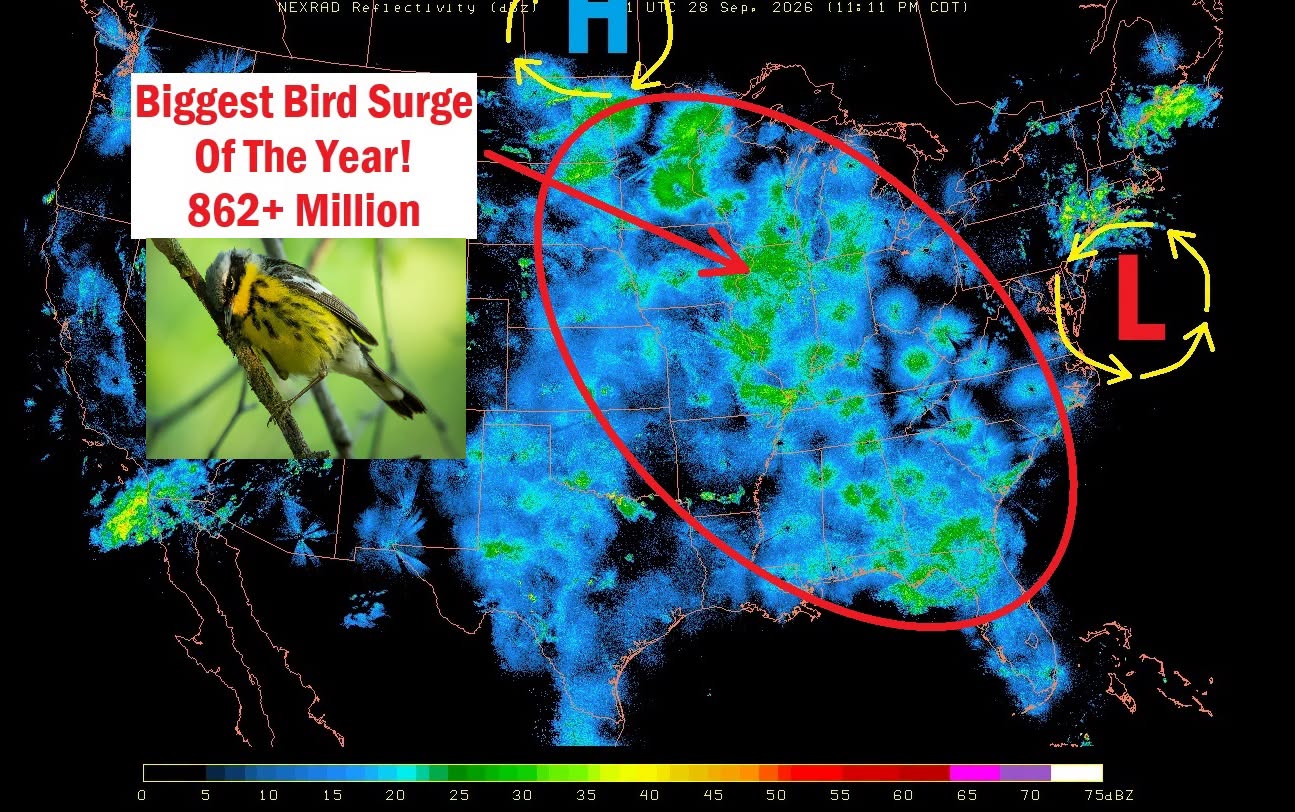
Great Lakes Region – It was a truly remarkable night in the skies above the United States. Nearly one billion birds were in flight across the country on Sunday night, with an estimated 862.4 million birds migrating at the peak of activity around 11 p.m. Eastern Time on September 27, 2026. The massive movement marked the biggest bird migration surge of the year so far, and the Great Lakes region was right at the center of the action.
Radar Filled With Birds Instead of Rain
Weather radar is designed to track rain and storms, but on nights like this it picks up something very different. Raw NEXRAD radar data, shown before any filtering, revealed large areas of green and blue spreading across much of the central and eastern United States. That signal was not rain. It was millions upon millions of birds flying through the night sky.
The radar image showed dense bird activity stretching from the Upper Midwest and Great Lakes south through the Mississippi Valley and into the Southeast. Circular patterns around each radar site made it clear just how widespread the flight was, with nearly every station in the eastern half of the country picking up heavy migration traffic.
Where the Heaviest Migration Took Place
Migration estimates showed the highest traffic rates across a wide area of the country. The Great Lakes states, including Michigan, Wisconsin, Illinois, Indiana, and Ohio, saw especially strong activity. Heavy flight was also seen across Minnesota, Iowa, Missouri, Kentucky, and Tennessee, and continued south into Arkansas, Mississippi, Alabama, and Georgia.
Parts of the Plains also recorded high numbers, with strong movement extending across Kansas, Oklahoma, and into North Texas. Most birds were heading south, following their natural path toward warmer wintering grounds.
Some areas saw much lower activity. Parts of the Pacific Northwest, pockets of Texas near the Gulf Coast, and portions of the Northeast showed lighter migration traffic, likely influenced by local weather conditions, including the storm system spinning off the Atlantic coast.
Why So Many Birds Flew at Once
Birds often wait for the right weather before taking off on long migration flights. Clear skies and favorable winds, especially winds blowing from the north behind a cold front, give birds a helpful push southward and make travel easier. When these conditions line up after a period of less favorable weather, huge numbers of birds can take to the sky on the same night.
Most songbirds migrate at night. Flying in the dark helps them avoid predators, stay cooler, and use the stars to help guide their way. They then rest and feed during the day before continuing their journey.
Migration Running Ahead of Normal
This fall’s migration numbers are running ahead of the historic average for this time of year. There are a few possible reasons for that. Birds may simply be migrating a little earlier than normal, or the bird population may have grown more than expected this summer, thanks to a successful breeding season. It is also possible that both factors are playing a role.
Peak Season Is Winding Down
While Sunday night was the biggest surge of the year so far, the overall peak of fall migration has now passed. Activity will continue for several more weeks, but migration numbers typically begin to drop off noticeably by the middle of October as most birds finish their journeys south.
How You Can Help Migrating Birds
Residents can help protect birds during migration by turning off unnecessary outdoor lights at night, especially bright lights on tall buildings, porches, and yards. Artificial light can confuse birds and draw them into cities, where they risk colliding with windows and structures.
Keeping cats indoors, adding decals or screens to large windows, and planting native plants that provide food and shelter are other simple ways to support birds as they pass through.
A Night for Bird Lovers to Remember
For bird watchers and nature lovers, this is one of the most exciting times of the year. Stepping outside on a quiet, clear night, you may even hear the soft calls of birds passing overhead as they travel south.
For more weather updates and nature stories from across the country, stay with bchssreport.com.