
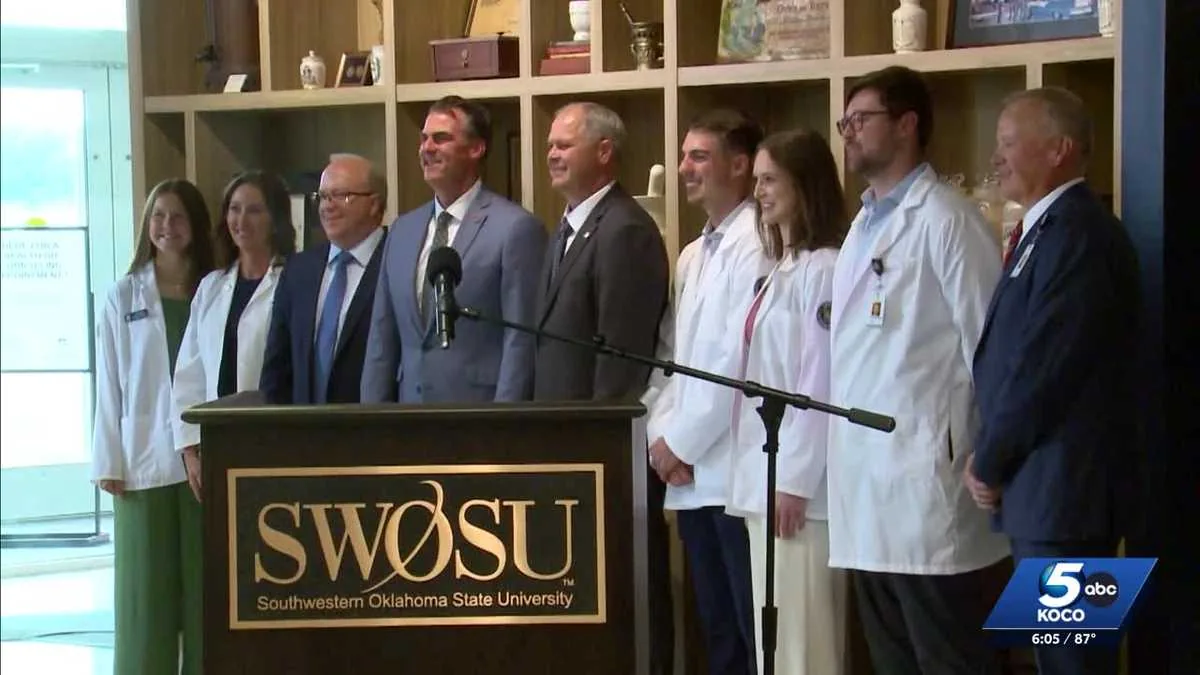
Weatherford, Oklahoma, Rural Health Receives $223 Million Boost as SWOSU Expands Specialty Care and Training Closer to Home
WEATHERFORD, OK — Rural health care in Oklahoma is getting a major financial lift, and Southwestern Oklahoma State University is helping put part of that money to work in western Oklahoma. The state received $223 million from the $50 billion rural health care transformation fund created under the One Big Beautiful Bill Act, with state leaders saying Oklahoma ranked fifth among states in the amount awarded.
At SWOSU in Weatherford, officials said more than $4 million is being used to improve access to care and training. Early projects include a $200,000 mobile resource unit that will serve Washita and Roger Mills counties, areas where patients often have to travel long distances for more advanced medical help.
Residents often leave home for specialty care
SWOSU rural health leaders say the funding responds to a familiar problem in Oklahoma’s smaller communities: people must drive far to see specialists. Kalie Kerth, director of rural health with the SWOSU College of Pharmacy Rural Health Center, said 72% of survey respondents needed specialty care within the last two years, but only 8.6% of those visits took place locally.
That gap means many patients are going more than 70 miles for advanced treatment. For older adults and families balancing work, transportation and ongoing medical needs, those trips can add time, cost and stress before care even begins.
The new grant work is designed to bring some of those services closer to home and reduce the burden on patients who have limited options nearby.
Mobile unit planned for Washita and Roger Mills counties
The first visible step in the SWOSU effort is a mobile resource unit that will serve Washita and Roger Mills counties. University officials described it as a way to extend care into communities that may not have easy access to specialty services or nearby hospital support.
The unit is part of a broader effort to make rural health systems more practical for people who cannot regularly make long trips to larger medical centers. By bringing some services closer to where patients live, the university hopes to make it easier for residents to connect with care sooner.
Officials said the work is still in its early stages, but they view the mobile unit as one of the first concrete investments from the funding.
Weatherford Regional Hospital partnership adds robotics and procedures
SWOSU is also working with Weatherford Regional Hospital to expand what can be done locally. One part of that collaboration involves robotic-assisted surgery, which university officials said could allow more procedures to happen in western Oklahoma instead of sending patients elsewhere.
Kerth said 360 procedures a year could potentially be performed locally through the expanded access. That shift could spare patients substantial travel, with officials estimating more than 46,000 miles could be cut from annual trips for care.
For patients and families, the benefit is not only shorter drives. Local treatment can also mean less time away from work, fewer repeat trips and more consistent follow-up when care is available closer to home.
More than 900 students will train with upgraded technology
The funding is not only about patient care. SWOSU officials said it is also supporting simulation and clinical technology for more than 900 students enrolled in pharmacy, nursing and allied health programs.
The university sees that investment as part of the long-term answer to rural health shortages. Kerth said sustainable rural health care depends on more than recruiting workers from elsewhere. In her words, communities also need to grow their own workforce.
By improving training tools now, the university hopes to prepare more students for practical work in rural settings and help keep future clinicians connected to the communities they may eventually serve.
State leaders expect more funding in the years ahead
Gov. Kevin Stitt said Oklahoma’s share of the rural health money places the state among the largest recipients. The funding is part of a five-year program, and officials said the current year is only the first stage of a longer rollout.
That means more opportunities for grants and projects are expected as the program moves into its second year. For SWOSU and other health providers, the first round of spending is intended to set up future improvements rather than solve every rural access problem at once.
Even so, university leaders said the money marks a meaningful start for communities that have long struggled with distance, limited specialty care and workforce shortages.