
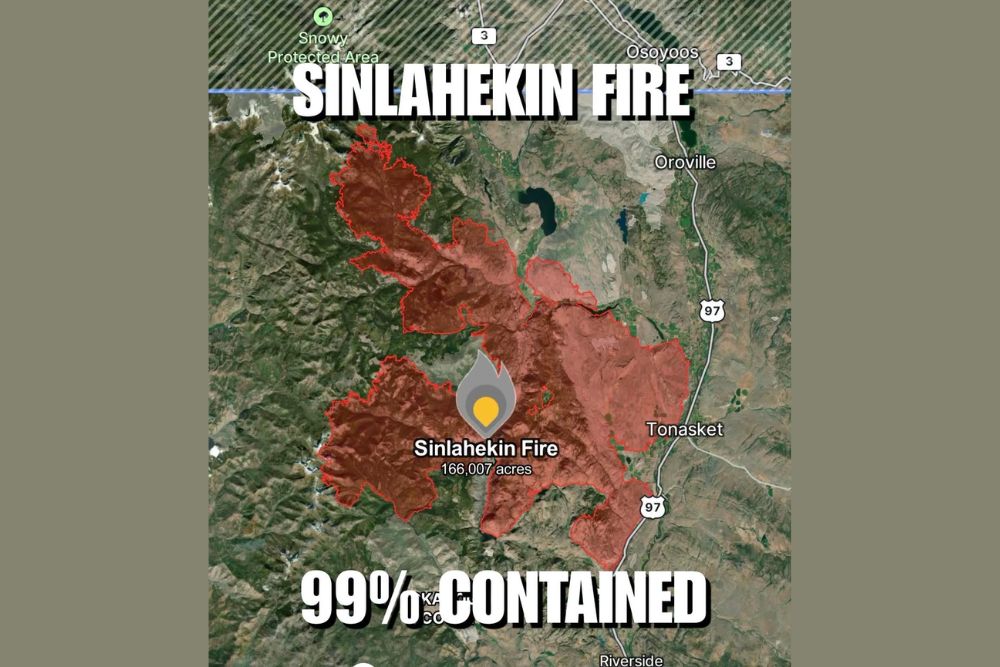
Sinlahekin Fire Reaches 99 Percent Containment After Burning More Than 166,000 Acres Over 73 Days in North Central Washington
Okanogan County, Washington – There is some good news for residents of north central Washington. The Sinlahekin Fire is now 99 percent contained, putting it on the verge of full containment after more than two months of burning. As of October 7, the fire had been active for 73 days and had grown to approximately 166,007 acres, making it one of the largest wildfires in Washington this season.
A Massive Fire in the Okanogan Highlands
The Sinlahekin Fire has burned across a large stretch of Okanogan County, west of the Okanogan River Valley and south of the Canadian border. The fire’s footprint stretches from the rugged mountains near the Sinlahekin Valley east toward communities along U.S. Highway 97, including areas near Tonasket.
The fire burned through mountainous and forested terrain, as well as grasslands and rangeland in the lower elevations. Its northern edge reached toward areas southwest of Oroville and the Osoyoos region near the U.S.-Canada border, while its southern edge extended toward areas north of Riverside.
166,007 Acres Burned
At about 166,007 acres, the Sinlahekin Fire covers an area larger than many cities combined. To put that in perspective, it is roughly 259 square miles, an area larger than the city of Seattle several times over.
Fires of this size often take weeks or even months to fully contain, especially in steep, remote terrain where access is limited and conditions can change quickly.
73 Days of Firefighting
For 73 days, firefighters, aircraft crews, and support teams have worked to slow and contain the fire. Crews faced challenging conditions throughout the summer and early fall, including hot temperatures, low humidity, dry vegetation, and gusty winds, all of which can help fires spread rapidly.
Firefighters built containment lines, conducted burnout operations, and protected homes and infrastructure in nearby communities. Their efforts have now brought the fire to nearly full containment.
What 99 Percent Containment Means
Containment refers to how much of a fire’s perimeter is surrounded by control lines that crews expect to hold. At 99 percent containment, nearly the entire edge of the fire is secured.
However, containment does not mean the fire is completely out. Pockets of heat can remain inside the fire area for weeks, especially in heavy fuels like logs and stumps. Smoke may still be visible at times, particularly on warm, dry, or windy days.
Cooler Fall Weather Helping
The arrival of cooler fall weather has helped firefighters make progress. Shorter days, cooler nights, higher humidity, and occasional rain showers all help reduce fire activity. As the Pacific Northwest moves deeper into its wet season, conditions should continue to improve.
Forecasters are also watching for a pattern change later in the week and into the week of October 12, with colder air and increasing moisture expected across the Pacific Northwest and northern Rockies. Additional rain and mountain snow could help further reduce fire activity in the region.
Smoke and Air Quality Improving
Throughout the summer, smoke from the Sinlahekin Fire and other wildfires affected air quality across north central Washington. With the fire nearly contained, smoke impacts have decreased significantly. Residents may still notice occasional smoke from interior burning, but widespread smoky conditions are less likely.
Recovery and Safety Concerns
As the fire winds down, attention will shift to recovery. Burned areas can create new hazards, including falling trees, unstable soil, and burn scar flooding. When heavy rain falls on burned ground, it can quickly lead to flash flooding and debris flows, since the soil cannot absorb water as easily.
Residents living near or below the burn area should stay alert during heavy rain this fall and winter.
Respect Closures in the Burn Area
Some areas within or near the fire perimeter may remain closed for safety reasons. Hunters, hikers, and anyone visiting the area should check for closures before heading out and avoid entering burned areas, where hazards such as weakened trees and hot spots may still exist.
A Relief for the Community
For the communities of Tonasket, Oroville, Loomis, and the surrounding region, reaching 99 percent containment is a major milestone after a long and stressful fire season. It is a credit to the many firefighters and crews who worked for more than two months to protect lives, homes, and land.
For more Washington weather updates and wildfire news, stay with bchssreport.com.