
Miami’s Wynwood Land Sale to Ken Griffin Caps a Three-Year Negotiation and Sets up Carnegie Mellon’s New Campus
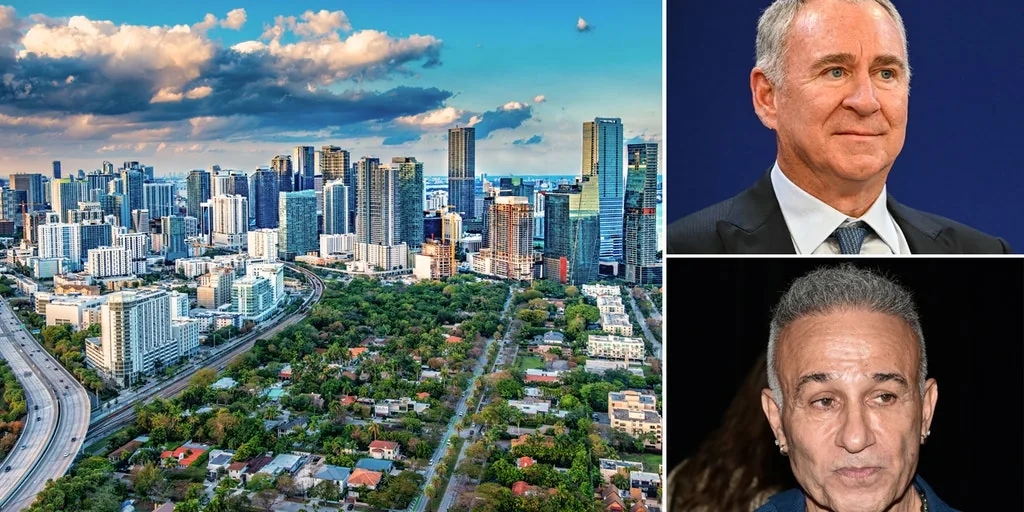
MIAMI, FL — A huge Wynwood land deal in Miami has closed after nearly three years of negotiations, turning a long-guarded property into the site of a major new academic project. Developer Moishe Mana sold about 30 acres to Citadel founder Ken Griffin for $1.1 billion, the largest land assemblage transaction in Florida history.
Mana said the first approach did not begin with a yes. He said Griffin’s representatives came to him about buying land he had spent years building out, and he initially told them the property was not for sale. After several days of thinking it over, he reopened talks. The transaction now clears the way for Carnegie Mellon University to establish a new campus in Miami.
How the Wynwood negotiations moved from refusal to agreement
Mana described the deal as a drawn-out process that began with an unexpected visit and ended with a formal closing on Sept. 29. According to him, the contract was signed 18 months before the sale closed, but the overall discussion stretched close to three years.
He said price was not the main issue once both sides sat down. In his telling, the discussion centered on what the land could become and whether it could support a project with lasting value for the city. He said the sale was ultimately about a cause that could affect South Florida for decades, not just a real estate return.
That perspective helped move him from saying no to agreeing to the transaction. Mana said the size of the opportunity made him stop and consider the broader impact on the neighborhood and on Miami itself.
The record-setting price reflects Wynwood’s long rise
Mana began buying in Wynwood during the Great Recession, when he acquired a distressed warehouse for about $5 million. He later assembled the broader portfolio for less than $70 million, building a large position in a neighborhood that has since become one of Miami’s best-known arts and development districts.
He said he spent years shaping the area through culture as well as construction. That included investing $2 million to $3 million each year in street art, music festivals such as III Points, and efforts to make Wynwood a centerpiece of Art Basel activity.
Mana argued that the neighborhood’s identity helped drive its value. He said the market should not be measured by land size alone, because the surrounding community, culture and uses matter when a property is priced. In his view, Wynwood proved that a district’s character can create returns that are far beyond the cost of the original investment.
Carnegie Mellon’s Miami campus is at the center of the deal
The land purchase is tied to Griffin’s larger commitment to Carnegie Mellon University, which includes a record $3 billion gift. The university says $2 billion will support Carnegie Mellon University Miami, while $1 billion will go to the Pittsburgh campus.
According to Carnegie Mellon, the donation is the largest individual gift in the history of higher education. The new Miami campus is intended to turn the city into a stronger destination for education and technological research, expanding its role beyond the wealth migration that has helped reshape South Florida in recent years.
Mana said he sees the project as a chance to change the future of the region and to open opportunities for younger generations. He said the value of the deal goes well beyond the money because of the educational impact it could have in Miami and across the Americas.
Why Mana says Griffin stands out as a civic investor
Mana said his view of Griffin changed as the talks went on. He said he had not known much about him at first, but came to see a person who cared deeply about education and human intelligence. In Mana’s words, Griffin uses money as a tool to get things done rather than as something to hold onto.
He also said Griffin’s investments have helped elevate Miami’s profile. In his view, the city is no longer seen only as a place for luxury or tax-driven relocation, but as a financial and cultural hub with wider reach.
Mana compared Griffin’s approach to that of historic builders and patrons who shaped major cities. He invoked figures such as Henry Flagler and the Medici family, saying Miami is in a period when large private commitments can influence the direction of business, culture and education.
What remains in Wynwood and where Mana is heading next
Even after the sale, Mana is not leaving Wynwood entirely. Mana Common says he is keeping more than 15 acres in the neighborhood and will continue overseeing operations and existing events at Mana Wynwood for the foreseeable future.
His attention is also turning to downtown Miami, where Mana Common says he has bought about 80 properties for roughly $600 million over the past 11 years. He said the goal is to create a tech and fashion ecosystem linking North America and Latin America while also bringing schools and arts into the area.
Mana said people regularly ask when construction will begin, but he wants the right buildings and the right neighborhood, not rushed development. He described downtown as Miami’s only downtown and said the long-term work there will focus on community building as much as real estate.