
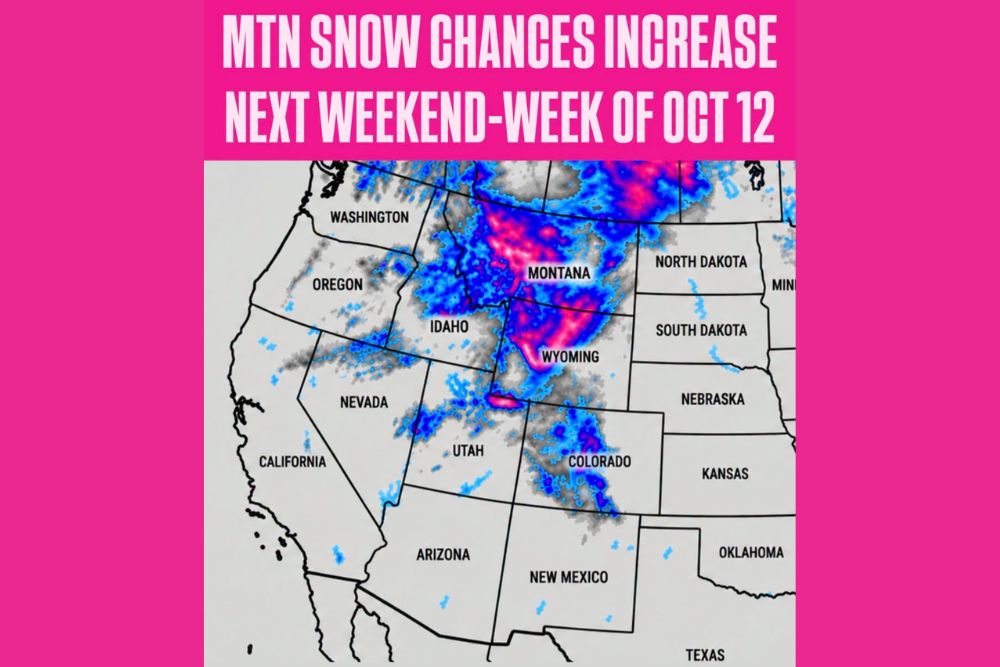
Pattern Change Ahead as Colder Air and Mountain Snow Chances Increase Across the West and Northern Rockies Next Weekend Into the Week of October 12
Northern Rockies – A notable weather pattern change is increasingly showing up across the western and northern United States, beginning next weekend and continuing into the week of October 12. A stronger trough is expected to move into the region, replacing the recent warmth with colder air and increasing moisture. That combination is making mountain snow a real possibility, especially across the northern U.S. Rockies, with chances potentially spreading into parts of the central Rockies as well.
From Warmth to Winter-Like Conditions
After a stretch of warmer-than-normal weather across much of the West, the pattern is expected to flip. A deeper trough, or dip in the jet stream, is forecast to push into the Pacific Northwest and northern Rockies, allowing colder air from Canada to spill south. At the same time, moisture is expected to increase across parts of the region, setting the stage for rain at lower elevations and snow in the mountains.
Best Snow Chances in the Northern Rockies
The best chances for mountain snow are expected across the northern U.S. Rockies, starting late next weekend and continuing into early the following week. Forecast guidance highlights Montana as one of the main areas to watch, especially across the western and central mountains, including the ranges along and east of the Continental Divide.
Wyoming is also expected to see significant mountain snow potential, particularly in the northwestern and central mountains, including areas near Yellowstone, the Absaroka Range, and the Wind River Range. The mountains of Idaho are also in the zone for potential snow as the colder air moves in.
Snow Possible in Utah and Colorado
Depending on how deep and cold the trough becomes, snow chances could spread farther south into additional higher-elevation areas of the West. Forecast maps show potential snow across the mountains of northern Utah, including the Uinta Mountains, as well as across the Colorado Rockies, especially along and west of the Continental Divide.
Some snow could also reach the higher terrain of northern New Mexico, though amounts there are expected to be lighter and more uncertain.
Pacific Northwest Turns Wetter
The Pacific Northwest is also expected to see a shift toward cooler and wetter weather. Parts of Washington and Oregon could see more rain, with snow possible in the higher Cascades if colder air arrives as expected.
Lighter Snow Chances East of the Rockies
Some forecast maps also show the potential for light snow or mixed precipitation spreading into parts of North Dakota, South Dakota, and northern Nebraska, especially in the higher terrain of the Black Hills. However, the greatest snow chances remain focused in the mountains.
Plenty of Uncertainty Remains
There is still plenty of uncertainty in the forecast. Key questions include the exact timing of the trough, the strength of the cold air, how low snow levels will drop, and where the heaviest precipitation will develop.
At this range, forecasters say it is best not to focus too heavily on individual model snowfall totals. Long-range snowfall maps can change a lot from one model run to the next. The bigger takeaway is the overall trend toward a colder, wetter, and potentially snowy pattern across parts of the West and northern U.S.
What Snow Levels Mean
Snow levels refer to the elevation where rain changes to snow. If colder air arrives as expected, snow levels could drop low enough to bring snow to mountain passes and higher valleys, not just the highest peaks. If the air is not as cold, snow may stay limited to the highest elevations, while lower areas see rain.
Travel Impacts in the Mountains
If snow develops, mountain travel could become more difficult. Drivers heading over passes in Montana, Wyoming, Idaho, Utah, and Colorado should be prepared for slick roads, reduced visibility, and possible chain requirements in some areas. This is especially important for anyone traveling for hunting season, which is underway in parts of the West.
Hunters and Hikers Should Prepare
Many people are heading into the backcountry this time of year for hunting, hiking, and camping. A sudden switch to colder and snowy conditions can be dangerous for anyone unprepared. Outdoor enthusiasts should pack warm layers, waterproof gear, extra food and water, and navigation tools, and check the forecast before heading out.
Good News for Ski Areas
The colder pattern could be welcome news for ski resorts across the West. Early-season snow and colder temperatures can help resorts begin snowmaking operations and build a base ahead of the winter season.
A Preview of Winter
This pattern change is another sign that winter is approaching in the West. Mid-October snow is not unusual in the northern Rockies, and this setup could bring one of the most significant early-season snow chances so far this fall.
For more Western weather updates and mountain snow forecasts, stay with bchssreport.com.