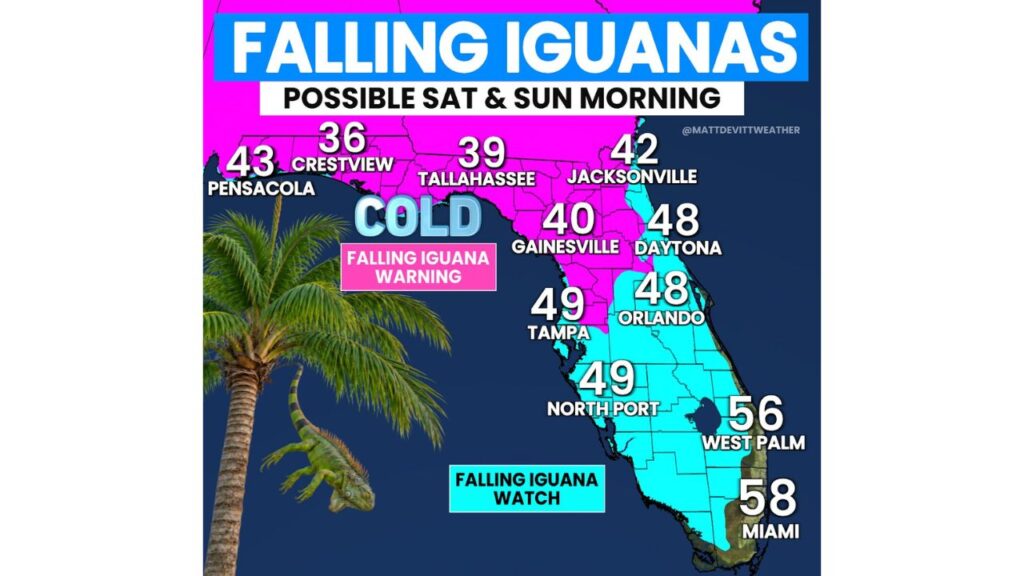
Falling Iguanas Possible in Florida This Weekend as Lows Drop to 36 in Crestview and the 40s Reach Gainesville, Orlando and Tampa, While Miami Stays Safe
FLORIDA — It’s that time of year again. Falling iguanas are possible across parts of Florida on Saturday and Sunday mornings, November 14 and 15, 2026, as colder air moves into the state.
When temperatures drop to 45 degrees or lower, iguanas can become so cold that they lose their grip and fall out of trees. They are not dead, just temporarily immobilized.
Why Iguanas Fall From Trees
Iguanas are cold-blooded reptiles, which means their body temperature depends on their surroundings. When it gets too cold, they slow down and can become stunned, causing them to drop from branches where they sleep.
Once the sun comes out and temperatures warm up, most iguanas wake up and move on.
Weekend Morning Low Temperatures Across Florida
| City | Forecast Low |
|---|---|
| Crestview | 36°F |
| Tallahassee | 39°F |
| Gainesville | 40°F |
| Jacksonville | 42°F |
| Pensacola | 43°F |
| Daytona Beach | 48°F |
| Orlando | 48°F |
| Tampa | 49°F |
| North Port | 49°F |
| West Palm Beach | 56°F |
| Miami | 58°F |
North Florida Coldest, but Iguanas Are Rare There
The coldest temperatures are expected across the Panhandle and North Florida, including Crestview, Tallahassee, Gainesville and Jacksonville, where lows drop into the mid 30s to low 40s.
These areas are labeled with a playful “Falling Iguana Warning,” since temperatures will fall well below the 45-degree threshold.
Central Florida on “Falling Iguana Watch”
Much of Central and South Florida falls under a lighthearted “Falling Iguana Watch.” Cities like Orlando, Tampa, Daytona Beach and North Port will be in the upper 40s, close enough that iguanas in colder pockets could become sluggish.
South Florida Iguanas Look Safe This Time
Most South Florida metro areas, where iguanas are most common, are expected to stay too warm for falling iguanas this round. West Palm Beach should drop to about 56 degrees, and Miami to about 58 degrees.
Note: These Aren’t Official Weather Alerts
The “warning” and “watch” labels are a fun way to describe the iguana risk and are not official National Weather Service alerts.
Part of Florida’s First Real Cold Snap
The chilly mornings are part of a strong cold front expected to bring Florida its first real taste of cold this season, with temperatures running 10 to 20 degrees below normal and wind chills in the 30s and 40s north of I-4.
What to Do If You See a Frozen Iguana
- Leave it alone, as it will usually recover when it warms up
- Don’t bring it indoors, since it may wake up and become defensive
- Keep pets away from stunned iguanas
- Watch your step under trees on cold mornings
Other Cold-Weather Tips for Floridians
- Cover tender plants and tropical landscaping
- Bring pets indoors overnight
- Check on older neighbors without heat
- Grab a jacket for early mornings
Stay with Bchssreport.com for the latest updates on this story.
About The Author
