
Birds Trapped in the Eye of Hurricane Isaias Show Up on Doppler Radar as Hurricane Hunters Spot a White Egret Flying at 9,400 Feet
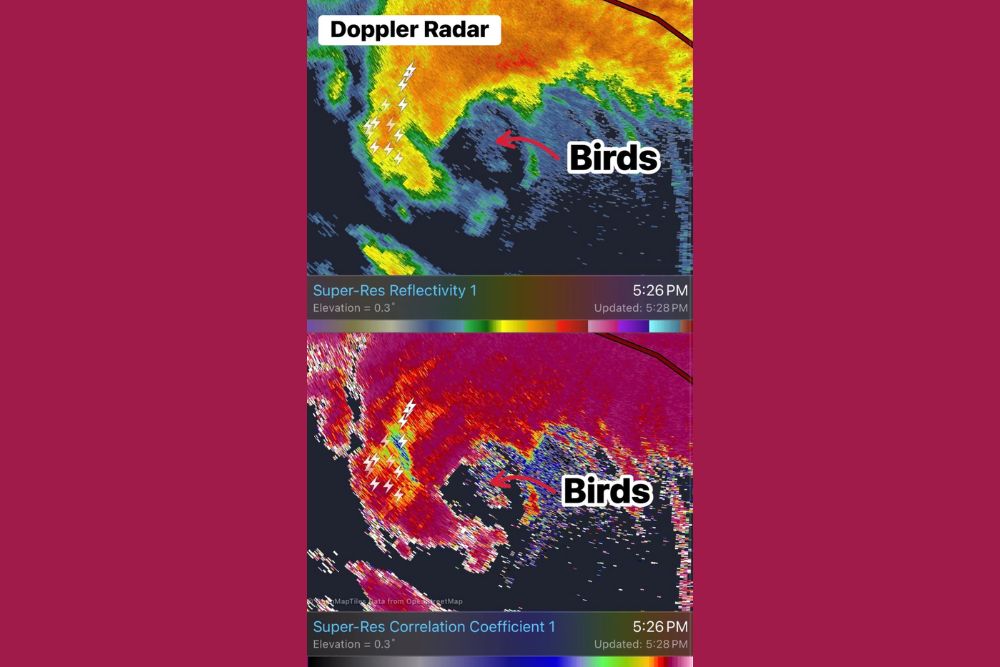
Pensacola, Florida – As Hurricane Isaias approaches the northern Gulf Coast, an unusual sight is showing up inside the storm. Birds have been reported trapped in the eye of the hurricane. Hurricane Hunter crews flying through the storm reported a white egret inside the eye at around 9,400 feet, and Doppler radar is now picking up what appear to be numerous birds circling within the calm center as Isaias moves toward Florida.
Hurricane Hunters Spot an Egret Inside the Eye
During a reconnaissance flight into Isaias, Hurricane Hunter crews reported seeing a white egret flying inside the storm’s eye at an altitude of about 9,400 feet. That is far higher than egrets normally fly. These wading birds are usually seen in marshes, wetlands, and along shorelines, not thousands of feet above open water in the middle of a hurricane.
The sighting is a strong sign that the bird, and possibly many others, got caught up in the storm and has been carried along inside its eye.
Radar Reveals Birds Circling in the Calm Center
Radar images taken around 5:26 p.m. show the eye of Isaias surrounded by intense bands of rain and frequent lightning in the eyewall. Inside the eye, where skies are usually much calmer, radar is detecting a faint ring of returns that do not look like rain.
On the reflectivity image, these returns show up as a light blue and green swirl curling through the inside of the eye. On a second radar product, the returns appear as a scattered, noisy pattern of mixed colors. That type of signal is typical of biological targets, such as birds and insects, rather than raindrops. Meteorologists use these differences in radar products to tell the difference between precipitation and living things in the air.
Why Birds End Up Trapped in Hurricanes
It has been well documented, especially in strong hurricanes, that birds can become trapped in the eye and carried hundreds or even thousands of miles from where they started.
The eye of a hurricane is a relatively calm area of light winds and often clear or partly clear skies. It is surrounded by the eyewall, a ring of the storm’s most violent winds and heaviest rain. Birds that get caught near the storm may fly into the eye to escape the fierce winds. Once inside, crossing back through the eyewall can be extremely dangerous, so many birds stay in the calm center and travel along with the storm.
Birds Can Be Carried Far From Home
Scientists and bird watchers have recorded many cases of birds turning up far outside their normal range after a hurricane. Seabirds such as terns, frigatebirds, petrels, and shearwaters have been found hundreds of miles inland after strong storms. Some birds are dropped off when the hurricane weakens over land and the eye falls apart.
After Isaias makes landfall, bird watchers along the Gulf Coast and farther inland across Alabama, Mississippi, Georgia, and Tennessee may want to keep an eye out for unusual species that may have been carried in by the storm.
Fall Migration Adds to the Numbers
The timing of Isaias may also play a role. The storm is moving through the Gulf during the peak of fall migration, when huge numbers of birds are flying south over the Gulf toward Central and South America. In recent weeks, radar has detected hundreds of millions of birds in flight across the United States on some nights.
With so many birds in the air over the Gulf this time of year, it is not surprising that some of them could get caught up in a hurricane.
Isaias Nearing Landfall
Isaias is expected to make landfall along the northern Gulf Coast between Mobile, Alabama, and Pensacola, Florida. Forecasts have called for the storm to reach Category 2 strength before coming ashore, bringing damaging winds, dangerous storm surge, heavy rain, and flooding to coastal communities.
Residents in the warning areas should follow guidance from local officials and the National Hurricane Center, stay indoors during the storm, and be aware that the calm of the eye passing overhead does not mean the storm is over. The back side of the eyewall can bring a sudden return of dangerous winds.
A Reminder of the Power of Hurricanes
The sight of birds trapped inside Isaias is a striking reminder of how powerful hurricanes are. These storms can sweep up wildlife, move them across vast distances, and leave them far from home once the storm fades.
For more Gulf Coast tropical updates and hurricane coverage, stay with bchssreport.com.