South Texas, Western Washington and New England Could Hear Thunder Saturday, but No Severe Weather Risk Is Expected Anywhere in the U.S.
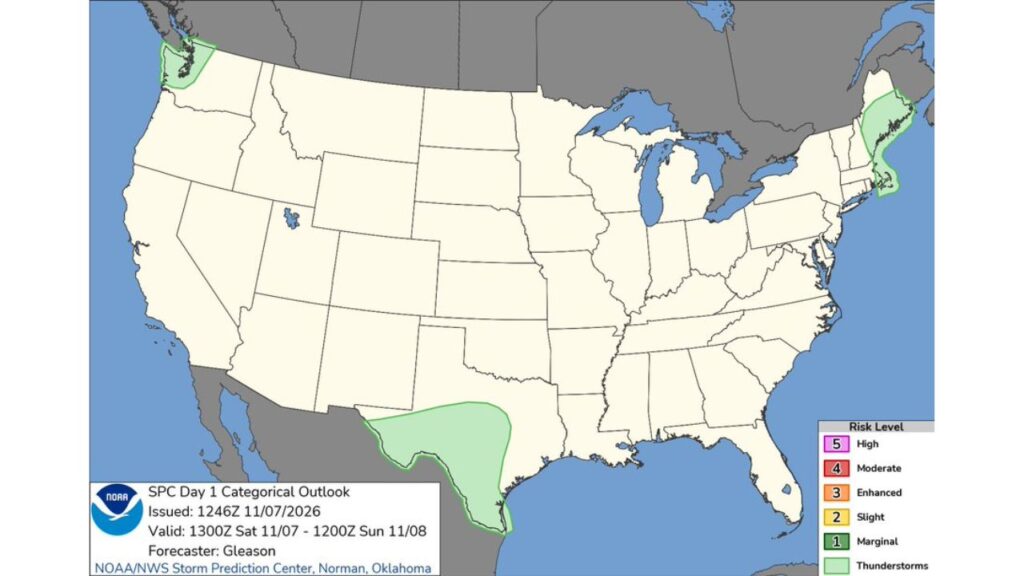
UNITED STATES — A few areas of the country could see thunderstorms on Saturday, November 7, 2026, but the latest outlook from the NOAA Storm Prediction Center shows no severe weather risk anywhere in the Lower 48.
The three areas highlighted for general thunderstorms are South Texas, western Washington and parts of New England.
Outlook Details
| Detail | Information |
|---|---|
| Issued | 6:48 a.m. CST Saturday, November 7 |
| Valid | 7 a.m. CST Saturday through 6 a.m. CST Sunday, November 8 |
| Forecaster | Gleason, Storm Prediction Center, Norman, Oklahoma |
| Severe risk | None nationwide |
| Thunderstorm areas | South Texas, western Washington, New England |
South Texas: Gulf Moisture Fuels Storms
The largest thunderstorm area covers much of South Texas, stretching from the Big Bend and Rio Grande region east toward the Texas Gulf Coast. This area includes parts of:
- San Antonio and the southern Hill Country
- Laredo and the Rio Grande Valley
- Corpus Christi and the Coastal Bend
Gulf moisture is moving into the region, part of a pattern expected to bring 2 to 4 inches of rain in spots near and north of Laredo through the weekend.
Western Washington: Pacific Storm Brings Thunder
In the Pacific Northwest, a thunderstorm area covers western Washington, including the Olympic Peninsula and Puget Sound region. A series of Pacific storms is bringing heavy rain to the coast and high-elevation snow to the Cascades.
New England: Storms Along the Departing Front
A third area covers parts of New England, including Maine, New Hampshire and coastal Massachusetts, as the cold front that soaked the East Coast on Friday continues to move offshore.
What “General Thunderstorms” Means
A general thunderstorm area means storms are possible, but they are not expected to reach severe levels. That means forecasters do not expect:
- Damaging winds of 58 mph or more
- Hail 1 inch or larger
- Tornadoes
Still Some Hazards to Watch
Even non-severe storms can bring:
- Lightning, which is dangerous for anyone outdoors
- Heavy downpours that can cause flooding, especially in South Texas
- Gusty winds near the strongest storms
A Calm Day for Most of the Country
Outside these three areas, most of the United States is expected to stay storm-free on Saturday, including the Plains, Midwest, Southeast and Mid-Atlantic, where cooler, drier air is settling in behind the front.
Flooding Remains the Bigger Concern in Texas
In South Texas, the main concern is not severe storms but heavy rain. Where storms repeat over the same areas, flash flooding could become an issue, especially around low-water crossings.
Weather Safety Tips
- When thunder roars, go indoors
- Avoid flooded roads in Texas
- Use caution on mountain passes in Washington
- Keep weather alerts on for any changes
Outlook: Quiet Severe Weather Pattern Continues
With no severe weather risk on the map, Saturday is shaping up as a quiet day for severe storms nationwide, even as rain and cooler air affect several regions.
Stay with Bchssreport.com for the latest updates on this story.
About The Author
