
Bird Takeover Lights Up Radar Across the Central U.S. as an Estimated 800 Million Birds Take Flight in a Massive Fall Migration
Central United States – Weather radars across much of the eastern half of the country were blooming with birds on Sunday night. A huge fall migration was underway, with an estimated 800 million birds in flight across the United States. As the night continued, that number was expected to climb even higher and could approach one billion birds, making it one of the biggest migration nights of the season.
Radar Filled With Birds, Not Rain
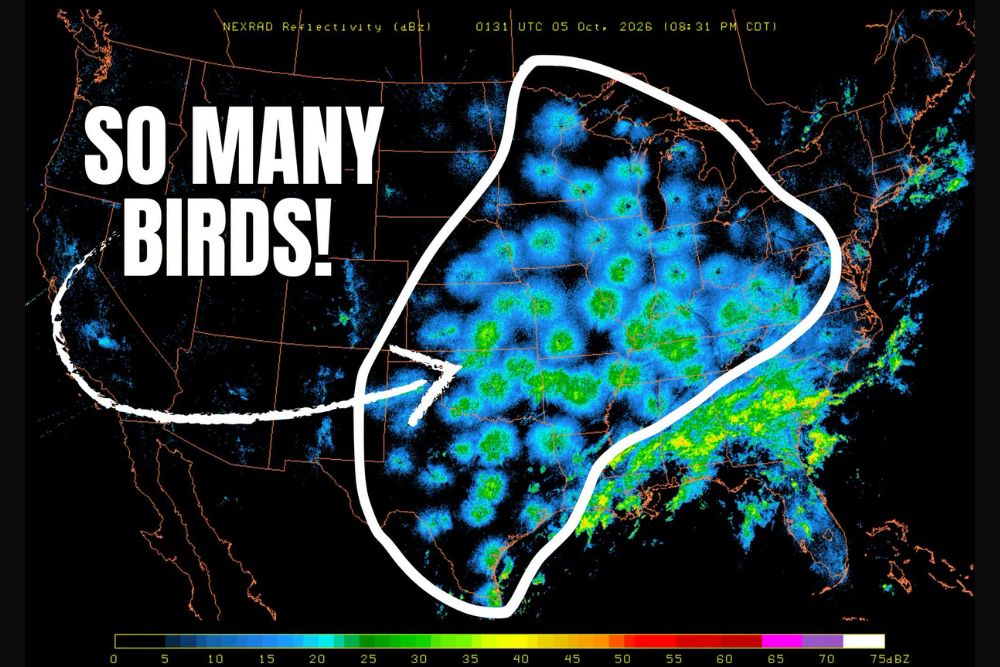
Radar images taken around 8:31 p.m. CDT on Sunday, October 4 showed dozens of circular blooms spreading out from radar sites across the Plains, Midwest, and Great Lakes. These rings of blue and green were not rain or storms. They were massive numbers of birds taking to the sky as darkness fell.
The bird signal stretched from the Upper Midwest and Great Lakes, including Minnesota, Wisconsin, Michigan, and the Dakotas, south through Iowa, Nebraska, Kansas, Missouri, Illinois, Oklahoma, and Arkansas, and all the way into Texas.
Rain in the Southeast, Birds in the Middle
Not everything on radar Sunday night was birds. Across the Southeast, radar showed real rain and storms stretching from the Gulf Coast through Alabama, Georgia, and the Carolinas. A stalled front and deep moisture brought a soaking rain to that region over the weekend, with flood concerns in some areas.
Meanwhile, the clear, calm skies across the central part of the country created perfect conditions for birds to begin their long journeys south.
How Radar Detects Birds
Doppler radars send out pulses of energy and measure what bounces back. Normally, that energy reflects off raindrops, snowflakes, or hail. But when birds fly in large enough numbers, they can reflect enough radar energy to show up on the screen as well.
Because birds take off shortly after sunset and spread out in all directions around each radar site, the result is a circular bloom centered on each radar. As the night goes on and more birds take flight, these rings can grow larger and brighter.
Helping Scientists Track Migration
These radar blooms are more than just a cool sight. Scientists use radar data to estimate how many birds are migrating, along with details such as their altitude, speed, and direction of travel. This information helps researchers better understand migration patterns, how weather affects bird movement, and how bird populations may be changing over time.
Radar has become one of the most powerful tools for tracking bird migration across large areas, giving scientists a nightly snapshot of what is happening in the skies.
Why So Many Birds Took Flight
Birds often wait for the right weather conditions before starting long migration flights. Clear skies, light winds, and especially north winds behind a cold front give birds a helpful push southward and make travel easier. When those conditions line up after a period of less favorable weather, huge numbers of birds can take off on the same night.
Sunday’s cooler, drier air across the Plains and Midwest created ideal conditions, prompting millions of birds to begin heading south.
Most Songbirds Migrate at Night
Many people are surprised to learn that most songbirds migrate at night. Flying after dark helps birds avoid predators, stay cooler, and navigate using the stars and Earth’s magnetic field. During the day, they rest and refuel in forests, fields, parks, and backyards before continuing their journey the next night.
Another Big Night After Last Week’s Surge
This is not the first huge migration night of the season. In late September, an estimated 862 million birds were in flight across the country in one of the biggest surges of the year. Sunday night’s numbers suggest another major wave of birds is moving south as fall continues.
Migration activity typically remains strong through early October before gradually dropping off by the middle of the month.
How You Can Help Migrating Birds
Residents can help birds during migration by turning off unnecessary outdoor lights at night, especially on tall buildings, porches, and yards. Bright lights can confuse birds and pull them off course, leading to deadly collisions with windows and buildings.
Other ways to help include keeping cats indoors, adding decals or screens to large windows, and planting native plants that provide food and shelter for birds passing through.
Listen for Birds Overhead
On calm, clear nights during migration season, people can sometimes hear birds passing overhead by stepping outside and listening quietly. The soft chirps and calls are often from songbirds communicating as they travel south in the dark.
For more weather updates and nature stories from across the country, stay with bchssreport.com.