
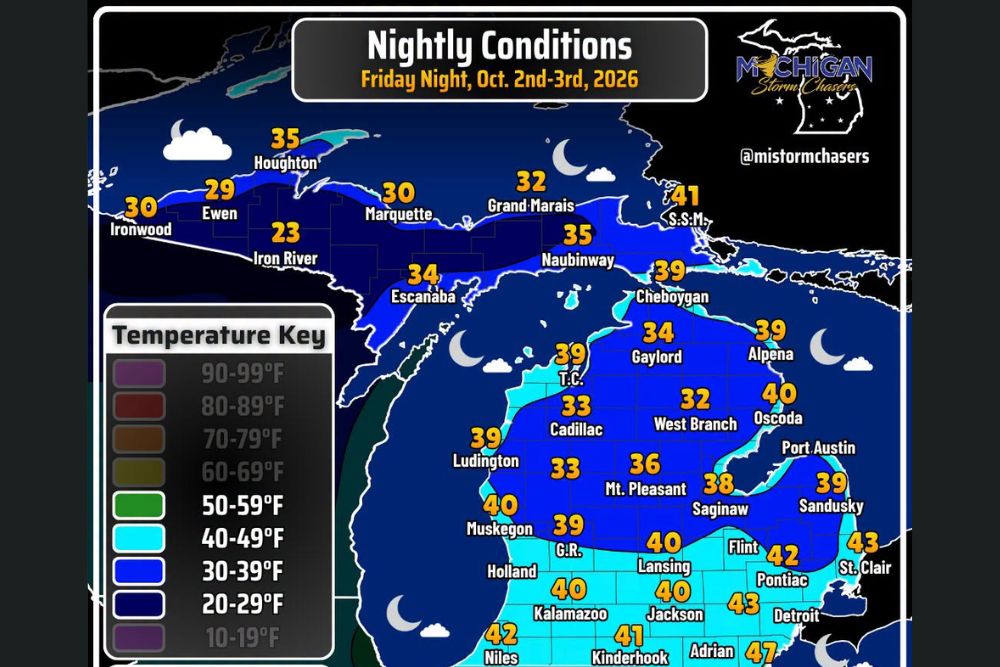
Widespread Frost and Hard Freeze Grip Northern Michigan as Temperatures Plunge Into the 20s and 30s, With One Spot Near 19 Degrees
Michigan – Michigan woke up to a frigid start this Saturday, October 3, as temperatures plunged into the 20s and 30s across much of the state overnight. Widespread frost and hard freeze conditions were expected across most of northern Michigan, while southern Michigan dropped into the 40s. In the coldest spots of the western Upper Peninsula, temperatures may have briefly touched 19 degrees, giving the state a true taste of the season ahead.
Who Invited the 20s?
After a stretch of mild late-September weather, Friday night brought a sharp reminder that fall is here. Mostly clear skies allowed the heat from Friday afternoon to escape quickly into the atmosphere overnight, letting temperatures fall fast. Without clouds acting like a blanket to trap warmth near the ground, many areas cooled well below freezing.
Thankfully, there were no precipitation chances overnight. With temperatures this cold, any moisture could have fallen as light snowflakes in parts of the north.
Coldest Temperatures in the Upper Peninsula
The Upper Peninsula saw the coldest readings in the state. Iron River dropped to around 23 degrees, while Ewen fell to about 29. Ironwood and Marquette reached around 30 degrees, and Grand Marais dipped to about 32.
An isolated location in the western U.P. may have briefly touched 19 degrees, which would be one of the coldest readings in the Great Lakes region so far this season.
Some areas near the lakeshore stayed a bit milder. Escanaba dropped to around 34 degrees, while Houghton and Naubinway were near 35. Sault Ste. Marie stayed warmer at around 41 degrees.
Northern Lower Michigan Freezes Too
Across northern Lower Michigan, many locations dropped to or near freezing. West Branch fell to about 32 degrees, while Cadillac reached around 33. Gaylord dropped to about 34, and Mount Pleasant came in near 36 degrees.
Areas closer to the Great Lakes stayed a little milder due to the warmer lake water. Traverse City, Cheboygan, Alpena, and Ludington dropped to about 39 degrees, while Oscoda was near 40.
Central and Western Michigan
Temperatures were chilly across central and western Michigan as well. Saginaw dropped to around 38 degrees, while Grand Rapids and Sandusky reached about 39. Muskegon, Lansing, Kalamazoo, and Jackson were near 40 degrees, with frost possible in rural and low-lying spots.
Southern Michigan Stays in the 40s
Southern Michigan escaped the worst of the cold, with lows mostly in the 40s. Kinderhook dropped to about 41 degrees, while Niles and Pontiac were near 42. Detroit and St. Clair came in around 43 degrees. Areas near Adrian and the far southeast corner of the state stayed even milder, near 47.
Toledo the Warm Spot
For anyone looking to stay warm overnight, Toledo, Ohio was the place to be. Lows there were expected to hang around 50 degrees, a big contrast to the freezing temperatures just a few hours north in Michigan.
Frost vs. Hard Freeze
A frost happens when temperatures near the ground fall to around freezing, causing ice crystals to form on grass, plants, rooftops, and car windshields. A hard freeze is more serious, typically occurring when temperatures fall to 28 degrees or lower for several hours. A hard freeze can kill most tender plants and usually ends the growing season for gardens and many crops.
With temperatures in the 20s across parts of the U.P. and northern Lower Michigan, hard freeze conditions likely ended the growing season for many areas.
Protecting Plants and Pipes
Gardeners across Michigan should check their plants after the cold night. Any remaining vegetables, such as tomatoes, peppers, squash, and herbs, may have been damaged. If more cold nights are expected, covering plants with sheets or frost cloth, or bringing potted plants indoors, can help protect them.
Residents should also start thinking about winter preparation. Disconnecting garden hoses, draining outdoor faucets, and shutting off sprinkler systems can help prevent frozen pipes as colder nights become more common.
Bundle Up This Morning
Anyone heading out early Saturday should dress in warm layers, including jackets, hats, and gloves, especially in northern Michigan. Drivers should allow extra time to scrape frost off windshields and watch for slick spots on bridges and overpasses, where frost can form first.
A Sign of the Season Ahead
This cold snap is a clear signal that Michigan is moving deeper into fall, with winter not far behind. More frosty mornings are likely in the weeks ahead as the days grow shorter and cooler air becomes more frequent.
For more Michigan weather updates and local forecasts, stay with bchssreport.com.