
Winter Arrives on Mount Washington as the Summit Records Its First Measurable Snow, Subzero Wind Chills, and a 110 MPH Wind Gust
Mount Washington, New Hampshire – Winter has officially arrived on Mount Washington. The summit of the tallest peak in the Northeast recorded its first measurable snow of the season on Monday, October 5, along with subzero wind chills and a powerful peak wind gust of 110 mph. While much of New England is still enjoying fall foliage and mild afternoons, conditions atop the mountain looked and felt like the middle of winter.
First Measurable Snow of the Season
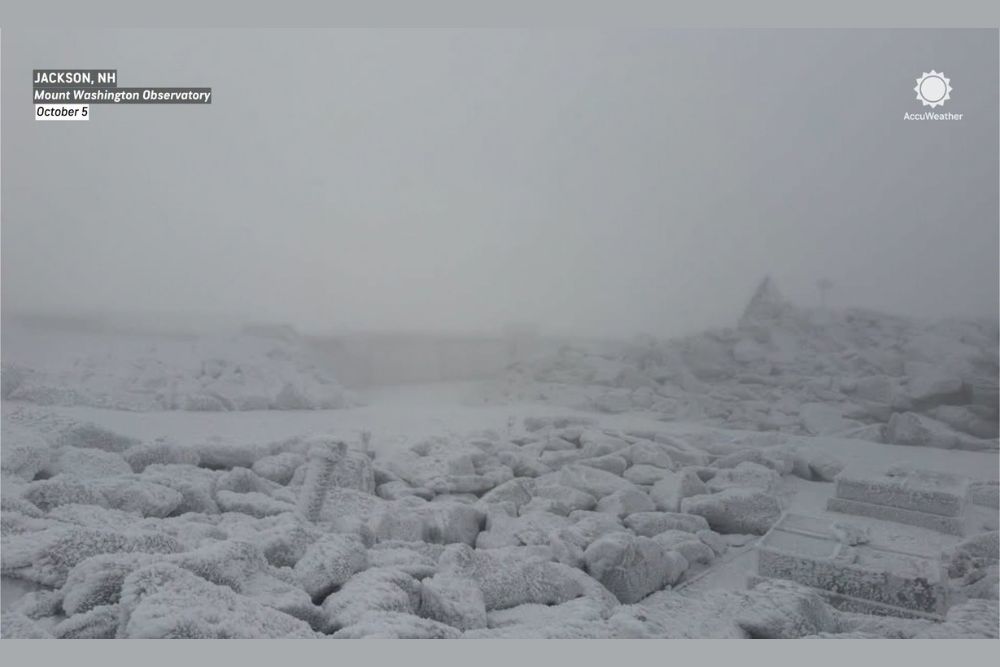
The summit picked up its first measurable snow on Monday, marking a clear shift toward winter in the high peaks of New Hampshire’s White Mountains. Images from the summit showed a landscape coated in snow and ice, with rocks, signs, and structures covered in a thick white layer.
Low clouds and fog wrapped around the mountaintop, creating near-whiteout conditions and limited visibility across the summit.
Rime Ice Covers the Summit
Much of the frozen coating seen on the summit was likely rime ice, a common sight on Mount Washington during the colder months. Rime ice forms when supercooled water droplets in fog or clouds freeze instantly on contact with cold surfaces. Strong winds help the ice build up in feathery, sideways formations, often growing on the side facing the wind.
The result is a frosty, otherworldly scene, with rocks and equipment appearing to be wrapped in white crystals.
Subzero Wind Chills
Along with the snow, the summit dealt with subzero wind chills on Monday. Wind chill measures how cold it feels on exposed skin when wind and temperature combine. With temperatures below freezing and strong winds blasting across the summit, conditions were cold enough to cause frostbite quickly on any exposed skin.
Peak Wind Gust of 110 MPH
The most impressive number from Monday was the peak wind gust of 110 mph. Winds that strong are equal to those found in a Category 2 hurricane and are powerful enough to knock a person off their feet.
Mount Washington is famous for its extreme winds. The summit sits at about 6,288 feet, making it the highest point in the Northeast, and it is located where several major storm tracks come together. Its height and position cause winds to speed up as they pass over the mountain. In fact, the summit once recorded a wind gust of 231 mph in 1934, which stood as the world record for decades.
Home of “the World’s Worst Weather”
Mount Washington is often described as having some of the worst weather in the world. Hurricane-force winds are common, especially during the colder months, and the summit can see snow in nearly any month of the year. Dense fog, freezing temperatures, and sudden changes in conditions make it one of the most challenging places in the country for both weather and outdoor recreation.
A weather observatory at the summit has been tracking these conditions for decades, providing valuable data on extreme mountain weather.
A Big Contrast With the Valleys Below
While the summit looked like the middle of winter, conditions in the valleys and lower elevations of New Hampshire were much milder. Many communities across the state are enjoying peak or near-peak fall foliage, with bright red, orange, and yellow leaves drawing visitors from across the region.
The contrast shows just how dramatically weather can change with elevation in the White Mountains.
A Warning for Hikers
Mount Washington is a popular destination for hikers, especially during the fall foliage season. However, conditions near the summit can be extremely dangerous this time of year, even when the weather at the base of the mountain seems pleasant.
Hikers planning to head above the treeline should check the higher summits forecast before setting out and be prepared for winter conditions, including snow, ice, freezing temperatures, and hurricane-force winds. Proper gear includes warm layers, waterproof clothing, insulated gloves, hats, traction devices for icy trails, and navigation tools.
Hikers should also be ready to turn around if conditions worsen. Many rescues on the mountain happen when people underestimate how quickly the weather can change.
Auto Road and Cog Railway Conditions
Snow, ice, and high winds can also affect access to the summit by the Auto Road and Cog Railway. Visitors planning to drive or ride to the top should check operating conditions before heading out, as closures or restrictions are common when winter weather strikes the summit.
A Preview of the Season Ahead
Monday’s snow and extreme winds are a reminder that winter is quickly approaching in northern New England. As October continues, more snow is likely on Mount Washington and other high peaks, and colder air will eventually spread to the lower elevations.
For more New England weather updates and mountain weather stories, stay with bchssreport.com.