
Kissimmee Vendor’s Viral Post Fuels Backlash at World Food Trucks After Lease Dispute and Sudden Move-Out Claim
KISSIMMEE, FL — A former vendor at Kissimmee’s World Food Trucks says she was pushed out of the space she rented for about a decade, setting off a wave of online backlash and boycott calls aimed at the food truck park.
Gabriella Santos, who ran Los Cipotes, posted a video saying she was given only hours to move her truck after years at the location. The message quickly spread, drawing millions of views and turning a private business disagreement into a public debate.
Santos says the conflict had been building for years, with concerns about safety, rising costs, and what she felt was limited support from management. World Food Trucks, meanwhile, has disputed key parts of her account and says it is focused on serving more than 100 businesses.
A decade-long tenancy ended in a matter of hours
Santos said she had operated at the Kissimmee food truck park for roughly 10 years before the dispute reached a breaking point during a lease renewal meeting this week. She said the meeting left her feeling pressured and without a workable path to stay.
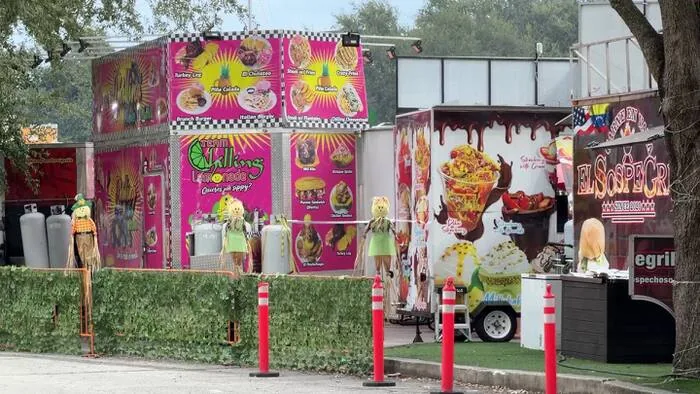
According to Santos, she was told to leave by midnight on Thursday after refusing to sign the new lease. Photos obtained by News 6 show her former spot now surrounded by tables, underscoring how quickly the space changed hands after she left.
She described the move-out as the end of a long stretch of frustration rather than a sudden disagreement. In her telling, the final meeting simply made years of tension impossible to ignore.
Concerns over costs, fees and declining sales
Santos said her complaints go beyond the lease itself. She pointed to what she described as safety problems, new fees, and added expenses tied to events that vendors were expected to help fund out of pocket.
She also said sales were getting worse as more food trucks were added to the park. In her view, the business model had shifted in a way that put more strain on individual operators while limiting their ability to earn enough to keep up.
“Somebody’s making that extra money, and it’s not us,” Santos said in a Friday interview, reflecting the financial pressure she says many small vendors are feeling. She said the combination of costs and competition had made the operation harder to sustain over time.
Dispute over point-of-sale access and lease language
Santos said one of the most unsettling parts of the renewal meeting involved a request for access to her point-of-sale system. She said she understood that request as a way for management to determine how much rent she should pay.
She recalled asking why such access would be needed and said the explanation she heard linked it to balancing rent. That moment, she said, helped convince her that the changes being discussed would be too burdensome for her business.
Santos also raised concerns about lease language she interpreted as requiring 60 percent if a renewed agreement were later broken. World Food Trucks publicly rejected that claim, saying on social media that it was completely false.
Vendor and park give sharply different versions
During her interview with News 6, Santos clarified that she was describing her own understanding of what the lease changes would mean, not alleging a literal demand for 60 percent of sales. She said she felt the terms amounted to taking too much of her business income.
“I never said that,” she said. “What I said was that they wanted 60 percent of my business because that’s how I feel. That’s my personal feeling of what you’re doing to me. You’re taking my profits.”
World Food Trucks responded in a statement that said vendors pay fixed weekly rent rather than a percentage of food sales. The company said it values respectful conversation, accurate information and clear communication with its vendor community.
Millions watched the story spread across social media
The viral reaction quickly moved the dispute beyond one vendor and one park. Santos said she believes the response connected because many people see small business owners as vulnerable and easy to overlook.
She said the online attention also reflected a broader fear among vendors who may not want to speak publicly about their own experiences. “I think people don’t want little people to get bullied,” she said.
World Food Trucks, for its part, urged the public to visit the park, meet the people behind the food and support the local entrepreneurs who operate there. In its statement, the company said its focus remains on helping the more than 100 businesses that make the venue possible.